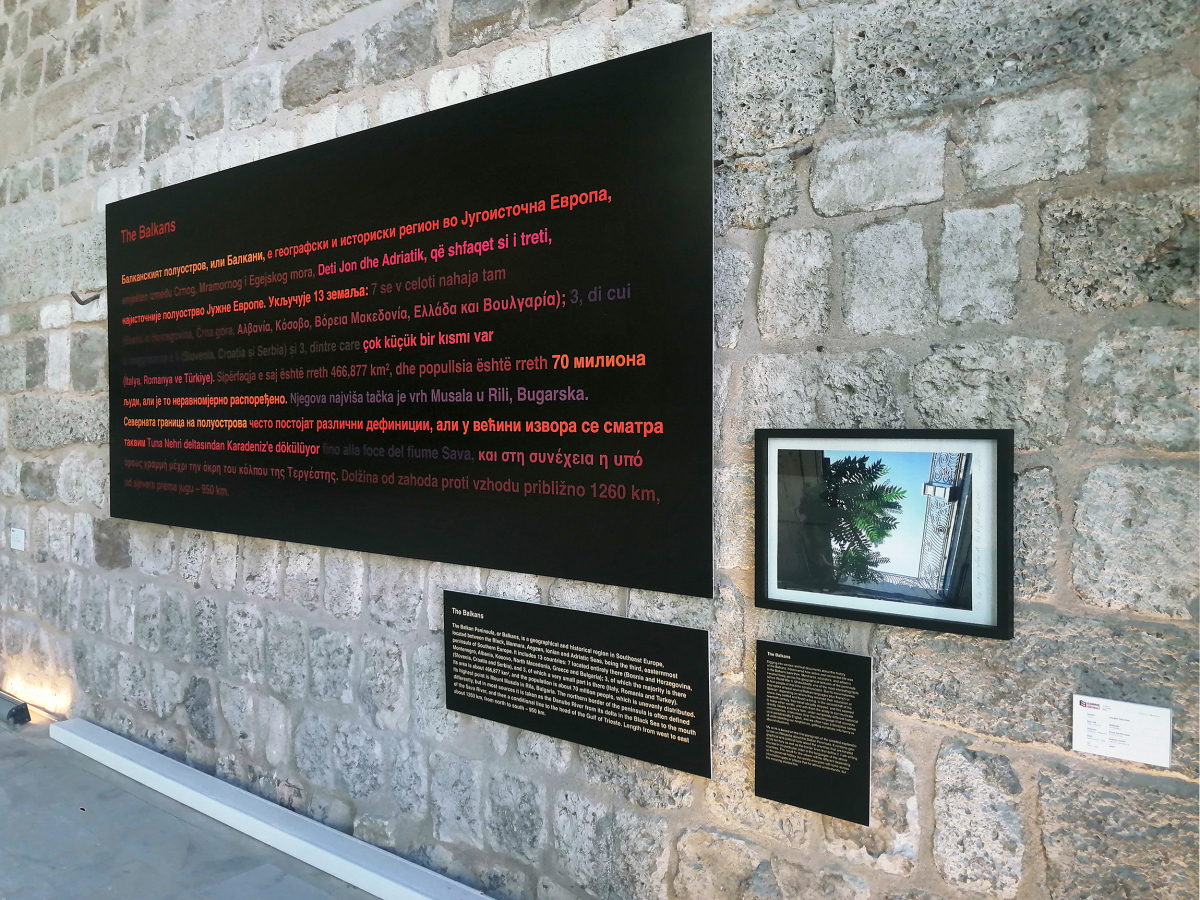
Digging into various archival documents about the history of the Balkans, I discovered how active and connected life was in the Balkans back then. Merchants, educators, and artisans traveled freely across the geographical latitudes of the peninsula before World War II. Undoubtedly, one of the most interesting facts is how people of that time communicated. Due to circumstances, they spoke at least several Balkan languages plus French or German, depending on where they received their education or where they settled and found a living. In the second half of the twentieth century, free travel abruptly stopped, and this seemed to erase other worlds, and with them the ability to communicate directly. Nearly a century later, under completely different historical circumstances, it becomes clear that the language that connects us is paradoxically English, and we often have a deceptive sense of understanding our neighbours, getting ourselves into funny or absurd situations.
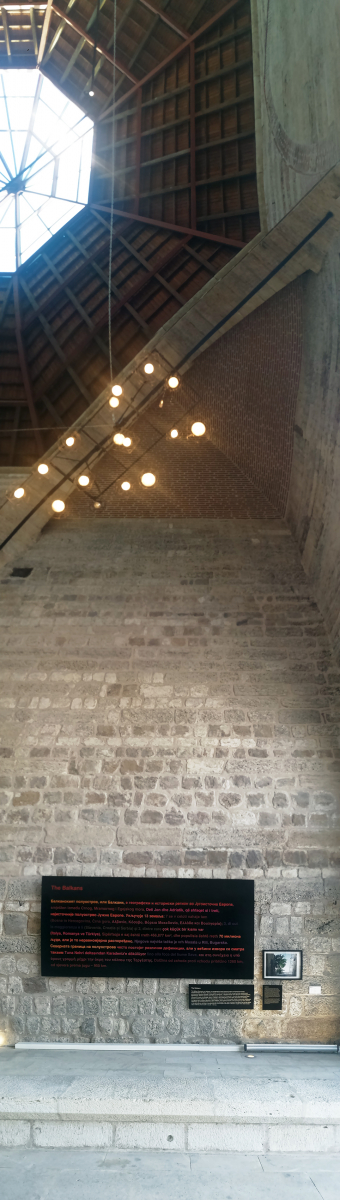
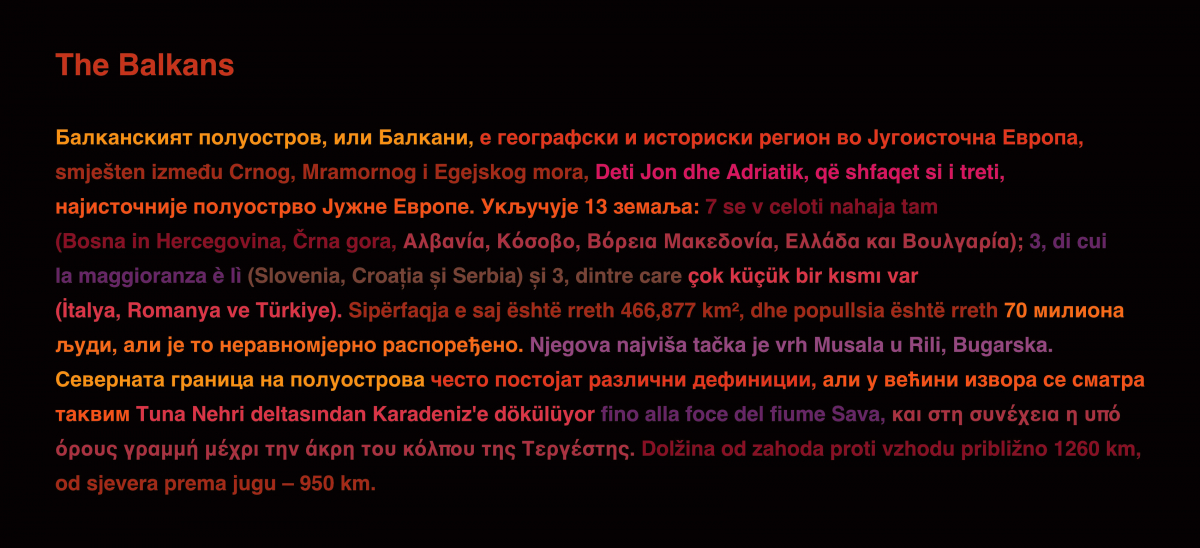
My work is based on the first paragraph of the simplest explanatory text on Wikipedia about the Balkan Peninsula. It contains geographical and political facts about the countries that are located on its territory as well as the border lines that define it. I am writing this text in no particular order in the languages of the above countries. The result for the viewer will be different depending on his personal history, but surely everyone will come across information gaps or places that he almost understands, but the meaning eludes him.